Gary H.
Senior Roofer

Planning a strata roof replacement? Learn what strata councils and property managers should consider before replacing a roof, from budgeting and inspections to material selection, project planning, and minimizing disruption for residents.
Replacing the roof of a strata property is one of the most significant capital projects a council or property manager will oversee. Unlike a single-family home, a strata roof protects dozens—or even hundreds—of residents, making proper planning essential. Beyond choosing a contractor, councils must consider budgeting, resident communication, scheduling, warranties, and long-term maintenance to ensure the project is completed successfully.
Whether you’re managing a townhome complex, low-rise condominium, or multi-building community, understanding the replacement process helps avoid unexpected costs, project delays, and unnecessary disruption.
“A successful strata roof replacement begins long before the first shingle is removed.”
Every roof eventually reaches the end of its service life. While repairs can extend its lifespan, there comes a point where ongoing maintenance becomes more expensive than replacing the entire roofing system.
Common signs include recurring leaks across multiple buildings, aging roofing materials, widespread deterioration, repeated emergency repairs, and moisture intrusion affecting common areas or residential units. If multiple sections of the roof are failing at the same time, replacement is often the most practical long-term solution.
A professional inspection provides councils with a clear understanding of the roof’s condition and whether repairs remain financially worthwhile.
Roof replacement is a major capital expense, making long-term financial planning essential. Waiting until leaks become widespread often forces emergency decisions that place unnecessary pressure on the contingency reserve fund.
By identifying replacement needs early, strata councils can budget appropriately, schedule work during favourable weather, and avoid costly emergency repairs. Planning ahead also provides more time to compare roofing systems, review proposals, and select the right contractor without unnecessary urgency.
Proactive planning almost always leads to better financial outcomes than reactive repairs.
“The most cost-effective roof replacement is the one that’s planned—not the one that’s rushed.”
No two strata communities have identical roofing requirements. The size of the development, number of buildings, roof complexity, accessibility, and roofing material all influence the project’s scope.
Townhome communities often involve multiple interconnected roofs with varying elevations, while condominium buildings may require extensive safety planning, specialized equipment, and careful coordination around residents and common areas.
A comprehensive site assessment ensures the replacement strategy is tailored to the property’s unique requirements rather than applying a one-size-fits-all approach.
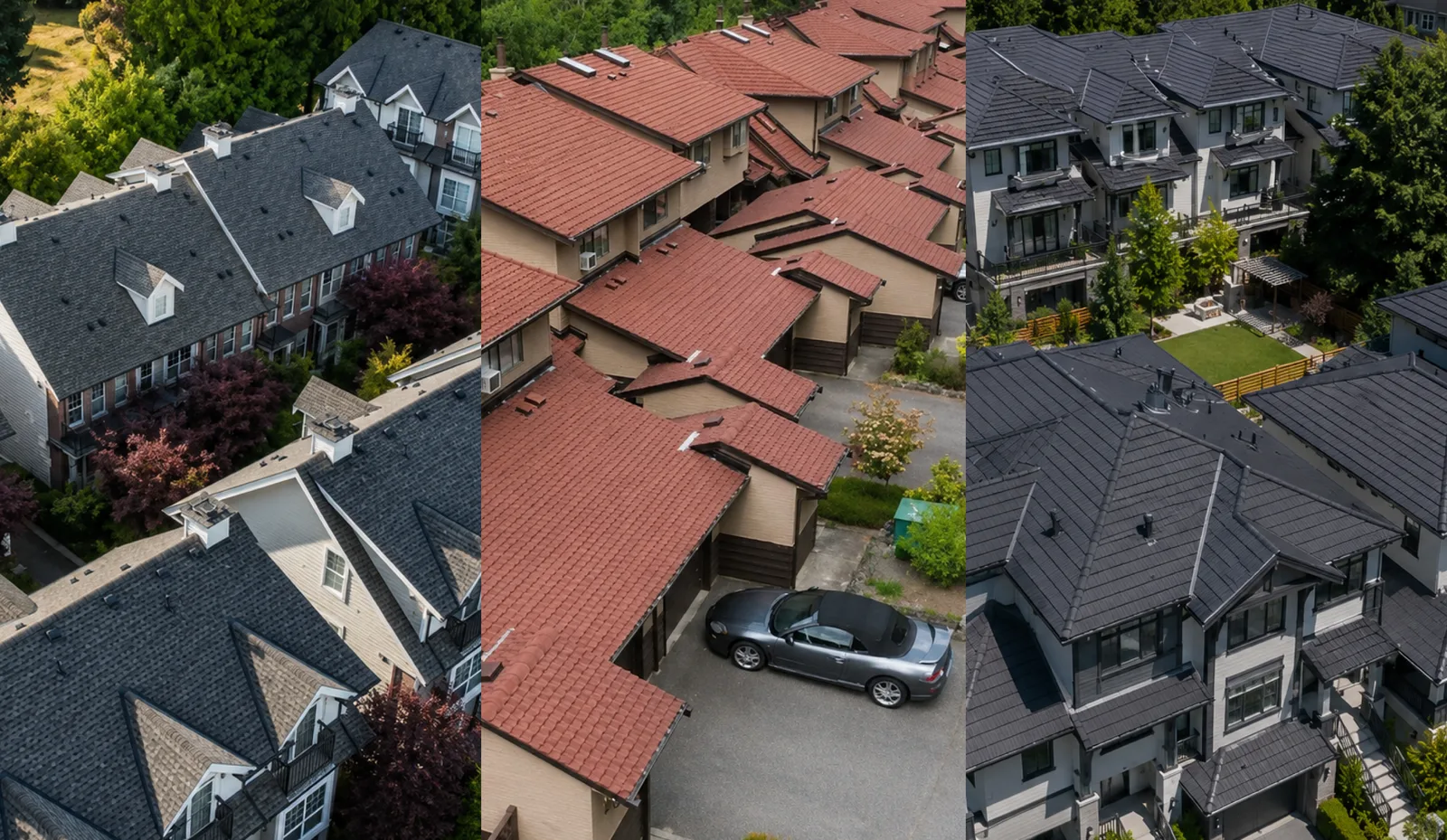
Selecting roofing materials involves much more than comparing prices. Councils should evaluate durability, maintenance requirements, warranty coverage, energy efficiency, appearance, and expected lifespan before making a decision.
For sloped roofs, architectural asphalt shingles remain a popular choice because they offer excellent value, durability, and design flexibility. Metal roofing provides exceptional longevity with minimal maintenance, while cedar roofing offers a premium appearance for select developments.
Flat-roof sections commonly found on parkades, podiums, or mixed-use buildings often benefit from modern systems such as TPO or EPDM, depending on the building’s design and drainage requirements.
The right roofing system should align with both the property’s long-term maintenance strategy and its budget.
Roof replacement projects affect every resident within the community. Noise, temporary parking restrictions, material deliveries, and construction activity are unavoidable parts of the process.
Keeping residents informed before and throughout the project helps minimize frustration and creates realistic expectations. Regular project updates, clear schedules, and advance notice of temporary disruptions allow residents to plan accordingly while maintaining confidence in the project.
Effective communication often becomes one of the defining factors of a successful strata roofing project.
“Residents don’t expect silence, they expect communication.”
Large-scale strata roofing projects involve multiple trades, equipment, and occupied buildings operating simultaneously. Proper safety planning protects residents, contractors, visitors, and neighbouring properties throughout construction.
Experienced roofing contractors establish clearly defined work zones, follow WorkSafeBC safety requirements, coordinate material deliveries efficiently, and maintain organized construction sites to reduce risks and minimize inconvenience.
Professional project management also helps ensure the project remains on schedule while maintaining consistent quality across every building.
A new roof represents a significant investment, making warranty coverage an important part of the decision-making process.
Councils should understand the difference between manufacturer warranties covering roofing materials and workmanship warranties covering installation. Together, these warranties provide long-term protection and confidence that the roofing system has been installed according to industry standards.
Choosing certified installers often provides access to enhanced manufacturer warranty programs.
Installing a new roof doesn’t eliminate the need for maintenance. Regular inspections, gutter cleaning, drainage maintenance, flashing inspections, and moss removal all help maximize the lifespan of the new roofing system.
Preventative maintenance also allows small issues to be identified before they become expensive repairs, helping protect the council’s investment while reducing long-term operating costs.
A well-maintained roof consistently outperforms one that’s only inspected after problems occur.
“Replacing the roof is the beginning of its lifespan, not the end of its care.”
Strata roof replacement is far more than a construction project—it’s a long-term investment in the safety, value, and performance of your community. Careful planning, accurate budgeting, clear communication, and choosing experienced roofing professionals all contribute to a smoother project and better long-term results.
Whether your property consists of townhomes, condominiums, or mixed-use buildings, understanding the replacement process allows councils and property managers to make informed decisions with confidence. With the right planning and professional guidance, a new roof can protect your community for decades while minimizing disruption for everyone who calls it home.
Senior Roofer